
Interest in learning and development (L&D) across Africa has grown significantly in recent years, driven by rapid digital transformation, evolving workforce demands, and the urgent need to build future-ready skills. With over 230 million jobs on the continent expected to require digital competencies by 2030, organisations are under increasing pressure to rethink how learning is designed and delivered. At the same time, more than half of organisations report that a large proportion of their workforce will need reskilling within the next few years, underscoring the strategic importance of effective L&D interventions.
However, many trainers pay more attention to “what” they teach than to “how” they teach. This overemphasis on content, at the expense of delivery and learner engagement, continues to limit the effectiveness of training interventions. Yet, both global and African trends increasingly demonstrate that how learning is facilitated is just as critical as what is taught. Learners today expect more than information; they expect experiences that are engaging, relevant, and applicable to real-world contexts. In fact, up to 80% of employees now demand more personalised and interactive learning approaches, highlighting a decisive shift away from traditional, one-size-fits-all training methods.
In the African context, this challenge is further shaped by unique structural and cultural realities. While access to digital learning has expanded rapidly, with internet usage increasing by over 100% in recent years, there remains a significant gap between access and meaningful participation in learning. This underscores the need for training approaches that go beyond content delivery and instead prioritise engagement, accessibility, and contextual relevance.
This article explores the evolving pedagogy of training in the African L&D space, arguing that effective learning is shaped as much by delivery methods as by content. It examines the shift from traditional, passive approaches to more participatory and learner-centred methods that draw on Africa’s rich oral traditions, accommodate diverse learning styles, and leverage digital innovation. It also highlights how organisations can bridge the gap between global best practices and local realities by designing learning experiences that are both culturally grounded and future-focused.
Ultimately, effective L&D in Africa requires a deliberate integration of inherited systems and indigenous knowledge frameworks. By embedding storytelling, dialogue, collaboration, and reflective practice into modern training approaches, organisations can create learning environments that resonate deeply with African learners while meeting global standards of excellence.
Understanding the Pedagogical Journey of L&D in Africa
Pedagogy focuses on the strategies, methods, and techniques used in teaching and instruction. Learning pedagogy has shifted from colonial ‘chew and pour’ methods, which do not foster deep understanding, to Western approaches that emphasise critical thinking and interactive problem-solving.
In the past, learners were expected to ask a few questions, participate passively, and depend on authority figures for information. Today, education encourages participation and critical thinking. Here is a summary of how pedagogical approaches to learning have changed over time.
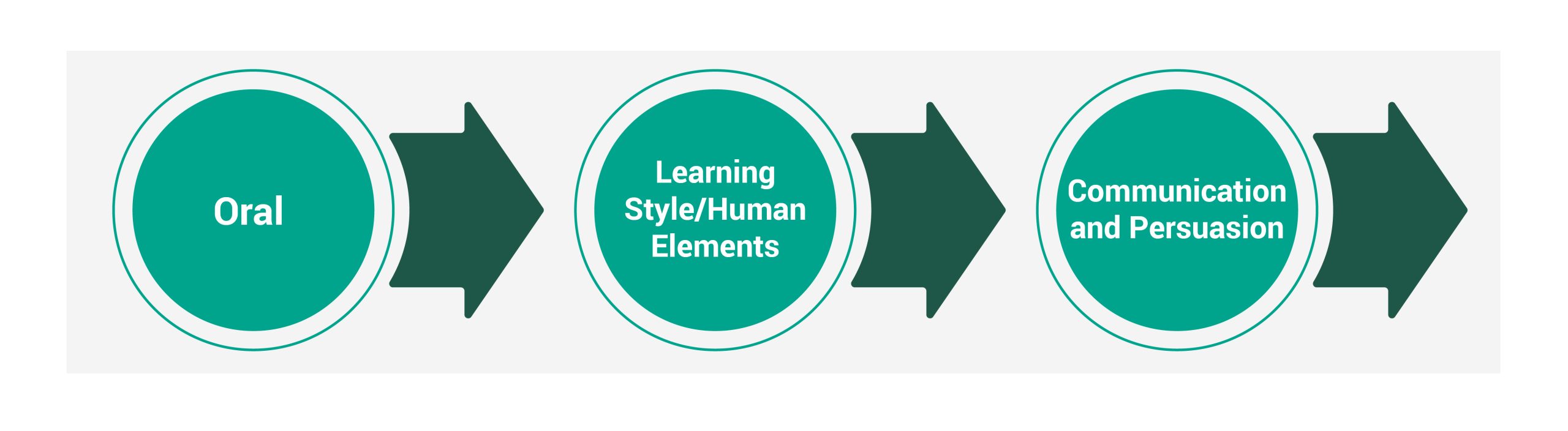
Leveraging Africa’s Oral Traditions in Modern Training
Africa’s tradition of storytelling, proverbs, and group learning is a strong foundation for effective training today. Instead of relying only on Western L&D models, we should use these cultural strengths to make learning more relatable and relevant. This removes a major barrier to success. As Adams (2025) said, cultural relevance is one of the “series of matters to be mitigated so that quantitative uplift through learner credentialisation can ensue.”
In other words, we cannot make big improvements in certified skills until learning is meaningful for people. Organisations need to build a strong, genuine culture first, because you cannot share a powerful “our story” with learners without it.
Learning Styles and the Human Element of Teaching
Good teaching is more than just sharing information. It is about understanding how people learn best. This means moving away from a one-size-fits-all approach and recognising different learning styles. Models like visual, auditory, and kinesthetic are helpful, but real teaching skill comes from being flexible. This is especially important in Africa’s diverse workplaces, where teachers need to switch between visual and auditory instruction for learners.
This flexible approach is central to effective teaching and is based on empathy and cultural understanding. A teacher who knows their learners’ background can make abstract ideas practical and relatable. Flexible teaching methods are essential. They help ensure that learning is not only delivered but also understood and remembered.
As pedagogy evolves, delivery systems inevitably follow. Digital learning is not a departure from instructional design principles, but a reconfiguration of them across new media. The cultural and cognitive principles that shape effective face-to-face learning must now be reinterpreted within digital environments.
The Digital Leap: Scaling Relevance and Accessibility
The COVID-19 pandemic changed learning and development (L&D) worldwide, causing a rapid shift to digital learning. In Africa, this was a major change, removing distance barriers and allowing organisations to train people remotely in new ways. However, most digital content at first was generic and did not reflect local culture well.
Digital learning should be more than just uploading Western materials online. It is a great way to share the good teaching principles discussed earlier. With digital platforms, we can include Africa’s oral traditions in microlearning videos, create interactive scenarios based on local workplaces, and offer content in different formats like audio, video, and text to suit different learning styles. The pandemic showed that online learning works. Now we need to make it engaging and relevant, not just a way to share information.
Communication & Persuasion in Training
Good training is not just about sharing information. It is about convincing people, both logically and emotionally, to gain real commitment. Persuasion Theory explains this well and shows two main ways to influence an audience.
The central route uses logic and evidence. This method works well for technical or process training because it convinces learners with data, facts, and clear arguments.
The peripheral route works differently. It uses emotions, stories, and the trainer’s credibility. This approach is especially good for soft skills and works well in many African settings, where learners value trust and respected authority. Good trainers do not rely on just one approach. Instead, they blend both. They base their session on the logical “why” (central route) and use storytelling and relationship-building (peripheral route) to make the message memorable. This combined strategy leads to both understanding and commitment, creating lasting change.
Challenges and the Path Forward for the Organisation
Improving teaching in African L&D has its challenges. The main issues are:
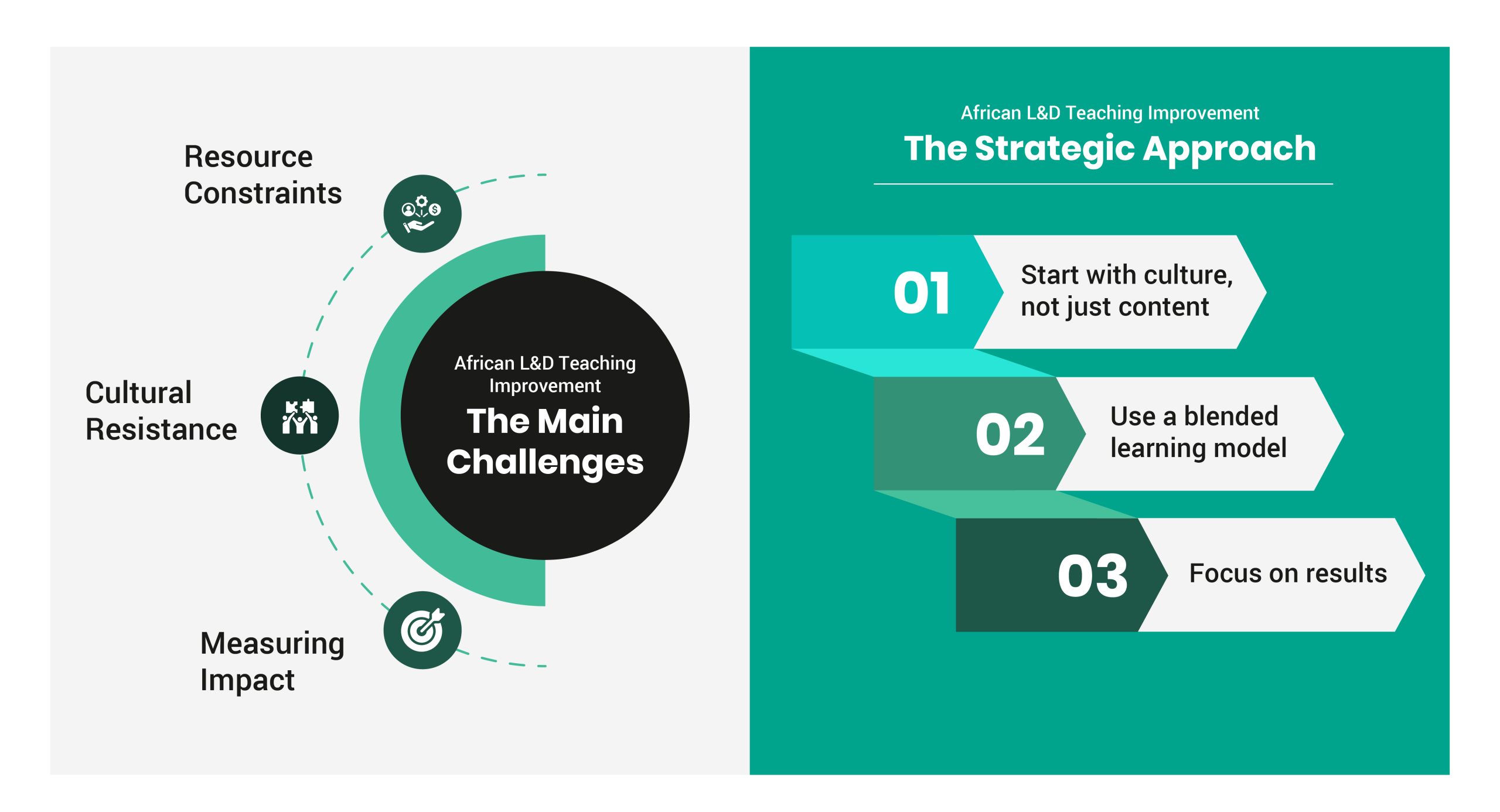
- Resource Constraints: Limited budgets for advanced digital tools and content development.
- Cultural Resistance: A lingering preference for traditional, lecture-based methods among some stakeholders and learners.
- Measuring Impact: Quantitatively linking improved training pedagogy to tangible business outcomes is difficult.
A step-by-step, strategic approach can help solve these problems:
1. Start with culture, not just content: Before moving training online, make sure it fits the local culture. Add local sayings, examples, and stories where possible.
2. Use a blended learning model: Combine affordable digital microlearning for theory with in-person sessions for practice and building community. This approach helps you get the most impact and make good use of resources.
3. Focus on results: Plan training with clear goals. Use data from digital platforms to track how engaged learners are and how they use their skills, not just whether they finish the course.
Author’s Note
At pcl., we address gaps in African L&D by using Bespoke Content Digitisation (BcX). We turn training materials into dynamic, easy-to-access digital resources. This allows us to incorporate Africa’s oral traditions, such as storytelling and proverbs, into microlearning videos and interactive modules, making learning more meaningful. Digitisation also helps us meet different learning styles by offering the same content in formats like audio for listeners, visuals for those who learn by seeing, and interactive scenarios for hands-on learners. By doing this, pcl. ensures knowledge is not only kept and shared, but also engaging, flexible, and truly useful for learners.
If you would like to learn how we can help your workforce grow and improve your business, please contact digitallearning@phillipsconsulting.net.
Author
Josephine Amono